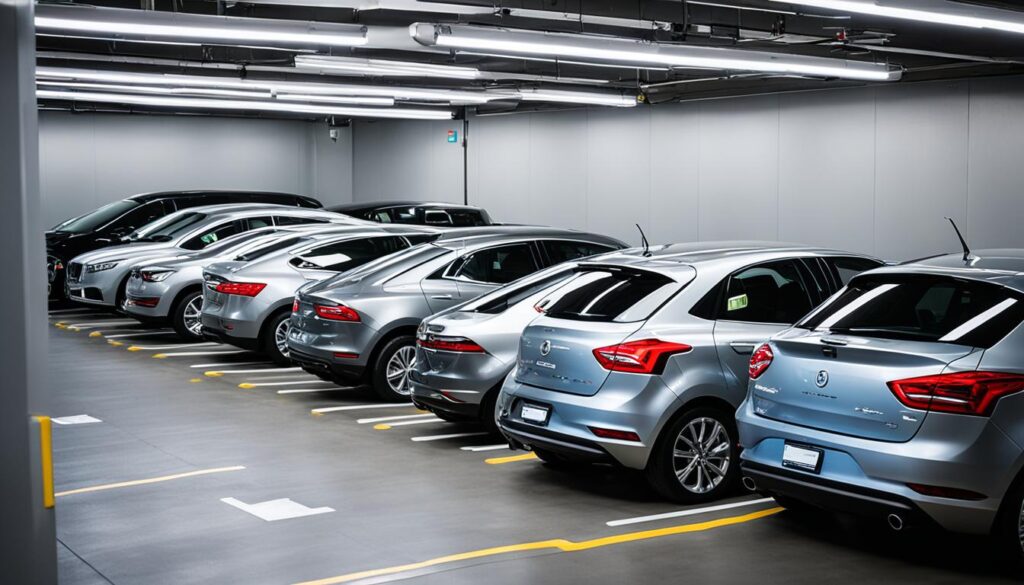
Did you hear that the average UK driver spends over 44 hours a year looking for parking? This shows we need new ways to deal with city driving problems. Automated parking systems use the latest technology to change how we park and move in smart cities.
Smart cities are full of new IT issues and chances. They use digital tools that update live and connect everywhere. These are big topics for institutions and researchers today. They’re trying to solve problems like finding the right parking spot quickly and safely using less space. This stops other cars from getting stuck. With gadgets like the Internet of Things and AI, we can find better ways to park.
Key Takeaways
- Automated parking systems change how we park in cities by making better use of space and simplifying the process.
- Smart cities use new technologies such as IoT, AI, and wireless connections to tackle city issues.
- Inappropriate parking causes traffic jams, showing why we need better parking options.
- These systems employ smart sensors, robots, and clever software to make parking easier and quicker.
- They have the power to reduce parking problems, improve city transport, and make cities more eco-friendly.
The Emergence of Smart Cities
The Internet of Things (IoT) is making everything connected through wireless communication. This impacts our lives in various sectors like smart cities, smart homes, and more. IoT devices gather data and share it, making services more efficient for us and for themselves.
Technological Advancements Driving Smart Cities
Smart parking uses short-range wireless networks. They include Bluetooth, ZigBee, Wi-Fi, and LTE for effective communication. These methods allow fast and dependable data sharing. LPWA networks are particularly popular now. They cover long distances with low power, saving energy, and extending reach.
Challenges of Urbanisation and Transportation
Smart cities need many groups to work together for the best outcomes. Because cities are growing fast, the streets are crowded with cars, causing big traffic jams. To solve these issues, smart cities use artificial intelligence and other advanced tech.
Automated Parking Systems: An Overview
Smart cities combine civil engineering with new technologies. They are now driven by innovations like the Internet of Things (IoT), 5G, and synthetic intelligence. These technologies are key in enhancing smart cities. They use devices, networks, and the cloud to blend activities towards common goals. In smart cities, IoT devices are vital for automation and collecting data.
Concept and Functionality
An automated parking lot system is designed to make parking easier and safer for drivers. It uses tools like sensors, robots, and AI to improve parking spaces and the process itself.
Benefits of Automated Parking Systems
Automated parking adds ease to smart cities. It improves smart parking and driver experience. This technology cuts down on parking time and effort, making it smoother for everyone.
Also, it helps cities become more eco-friendly. It optimises parking space, which reduces pollution. Plus, it encourages the growth of green areas in the city.
| Key Benefits of Automated Parking Systems |
|---|
| Efficient space utilisation through vertical and horizontal parking |
| Reduced emissions and pollution due to decreased vehicle idling |
| Seamless user experience with automated vehicle retrieval |
| Preservation of green spaces and mitigation of urban sprawl |
| Integration with smart city ecosystems for data-driven decision making |
Optimising Urban Space Utilisation
Automatic car parking systems are a light in the urban jam. They use the latest tech like sensors and robots. This makes urban space optimisation better and the way we park smoother. The big plus of these systems is they work very well. They can fit more cars in the same area using vertical parking, which means more cars can park in the same space than in regular parking lots.
Vertical and Horizontal Space Optimisation
By placing cars vertically and horizontally, these systems save a lot of space. This leaves more land for other uses. It fights urban sprawl and protects green space preservation.
Efficient Land Use and Preservation of Green Spaces
Efficient land use is key in planning smart cities. Automatic parking systems help a lot here. They make it possible to develop cities sustainably. This is done by using less land for parking and keeping green space preservation.
The Internet of Things and Wireless Connectivity
The Internet of Things (IoT) is growing fast. It connects machines through wireless tech. This is changing how we live, making cities, homes, and more smarter. IoT devices gather information and share it with us for better services and among themselves.
IoT-enabled Devices and Communication Protocols
Smart parking uses short-term wireless networks. Technologies like Bluetooth, ZigBee, Wi-Fi, and LTE are key here. They let IoT devices talk to each other fast and reliably.
Low Power Wide Area Networks (LPWAN)
LPWA networks are getting popular. They can reach far places without using much power. This makes them very energy-efficient and good at covering large areas.

Automated Parking Systems: Key Components
Automated parking systems use high-tech sensors, robotics, automation, artificial intelligence (AI), and machine learning (ML). These technologies come together to make the parking process smoother. They also help make better use of space and improve how people park their cars.
Sensors and Object Detection
Sensor systems play a key role in these parking setups. They can see and keep track of cars. This lets them spot where cars can park and keep traffic flowing safely.
These systems can even tell the difference between cars, people, and other things. This helps everyone stay safer and the parking system work better.
Robotics and Automation
Robotic parts are vital for moving cars to their parking spots. They include arms and special vehicles that carry cars around. This helps make the best use of the parking space.
All these automated parts work closely. This makes the whole parking process reliable, quick, and easy for everyone.
Artificial Intelligence and Machine Learning
Artificial intelligence and machine learning give these systems their smart features. They use data to assign parking spots and predict when more will be needed. They can even change how they work based on what’s happening in real-time.
Advanced machine learning methods are great at solving tricky problems. They can help predict traffic, find mistakes, and decide who gets which parking spot.
automated parking systems
Automatic car parking systems make parking easy and fast for drivers. You just drive to the entry point and the system does the rest. It parks your car in an available spot. Then, you can pick up your car easily, either with a button press or using an app.
Automated Valet Parking
Automatic valet parking systems manage the complete parking process. They use advanced technology like sensors, robots, and AI. These systems park your car for you. This means less stress and more time for your activities.
Self-Parking Technologies
Self-parking technologies let cars park themselves. They use sensors, cameras, and smart software. Cars can find parking spots and park accurately. This makes parking more convenient and saves time.
Environmental Benefits of Automated Parking
Automatic parking systems help the environment in many ways. They save space in cities by not needing big car parks. This cuts down on city sprawl and keeps green areas safe. Also, with less time spent finding a park, there’s less air pollution.
Reduced Emissions and Pollution
Automated parking helps cut emissions and make the air cleaner. It does this by reducing the time cars need to find a parking space. This benefit is huge for making cities nicer and more sustainable places to live.
Sustainable Urban Development
These systems are key to sustainable city planning. They use less land for parking, leaving space for parks or walking areas. This makes cities greener and better for everyone. It’s an important step towards building future-ready, sustainable cities.
Integration with Smart City Ecosystems
Smart cities are complex ecosystems with many key players like managed service providers and network operators. They work together to deliver top-notch services. The smart city ecosystems rely on the interaction of the environment and various entities. These include connected devices and infrastructure. In the digital and electronics realm, we see different types of ecosystems emerging. These include those where devices connect to create a unified and interactive system.
Multi-Stakeholder Collaboration
The accomplishment of smart city ecosystems depends on many parties working together. They include various devices that process a lot of data independently. This means less direct human involvement is necessary. People do interact with these devices to guide them, which is key to the overall system operation. This interaction is fundamental, especially in the implementation of smart features like collecting roadside data in urban areas.
Data-Driven Decision Making
In smart city ecosystems, there’s a wealth of data for data-driven decision making, key for effective urban management. Automated parking systems in these ecosystems gather real-time data on parking spaces, traffic, and how people move. This data-driven decision making lets authorities use valuable insights. They can improve parking, traffic, and the overall experience for everyone in the city.

Challenges and Future Prospects
Automatic car parking systems sound great, but they face big challenges. Implementation costs and technological complexities make it hard for everyone to use them. Putting these systems in cities needs lots of money and people who really know what they’re doing.
With more people moving to cities, we’ll need better parking options. But, to make these new parking systems work well everywhere, rules and laws need to be right. Governments have to deal with making sure our data and security are safe, and these systems work well with other smart city things.
| Challenges | Future Prospects |
|---|---|
|
|
As tech gets better and our cities get fuller, good parking becomes more and more important. We need to find ways to overcome the challenges and grab the chances that automated parking offers. This is key to creating sustainable and enjoyable smart cities in the future.
Case Studies and Real-World Applications
Automatic car parking systems are changing urban parking for the better. They show us what the future of transportation and city design looks like. These systems use new technology to solve parking problems, make cities more mobile, and help the environment.
As cities grow, using these new solutions will be important. Many cities worldwide are starting to use automated parking. This move improves how we use city space and benefits everyone.
| City | Automated Parking System | Key Benefits |
|---|---|---|
| Tokyo, Japan | Robotic Parking Garage | Increased parking capacity by 60%, reduced emissions, and enhanced user experience. |
| Singapore | Automated Valet Parking | Eliminated the need for manual parking, improved traffic flow, and optimised land use. |
| San Francisco, USA | Self-Parking Garages | Reduced parking search times by 43%, minimised congestion, and enhanced sustainability. |
Looking at these examples shows how much automated parking helps. It changes how we move and live in smart cities. The technology makes urban life better for all of us.
Automated Parking Systems: A Transformative Solution
Automatic car parking systems shine in crowded cities. They use advanced tech like sensors, robots, and AI to manage parking better. This technology stacks cars both up and across, leading to more space for other uses. It’s a win for cities, helping limit sprawl and save green areas.
Enhancing Urban Mobility and Quality of Life
These systems boost city life by using space well and cutting down on pollution. They fit perfectly in with the move towards greener city planning. By making the most of tech, cities can improve for those who live there and those just visiting.
Scalability and Adaptability Across Smart Cities
Automated parking systems are perfect for big, smart cities. They grow with the city and its need for efficient parking. These systems work well with what’s already there, offering a smart answer to city parking problems.
Conclusion
Automated parking systems are changing how we think about city travel and design. They use new technology to help with parking struggles, improve moving around the city, and make our urban areas more eco-friendly. As our cities grow, using these new solutions is key to making our city areas work better and solve modern problems.
This kind of parking system could totally change how cities deal with parking and get around. They use sensors, robots, and smart tech to make the best of the small space we have. This not only cuts down pollution but also helps add more nature areas into our city landscapes. Plus, parking becomes easier and smoother for everyone.
With more people living in cities, we need fresh ideas to handle parking. Leaders in policy, planning, and tech need to team up. They must find ways to deal with the tech challenges and rules so more places can use these smart parking solutions. This work can make our future cities not just green and efficient but also nicer places to live that truly meet our needs.
FAQ
What are automated parking systems and how do they work?
Automated parking systems use tech like sensors, robotics, and AI. They make parking better and faster. Your car is taken to a space and brought back by itself, making things easy.
What are the primary benefits of automated parking systems?
These systems are great because they use space better. This means more room for other things. They also cut down on time and hassle for parking. Plus, they help the environment by decreasing wasted fuel and pollution.
How do automated parking systems integrate with smart city ecosystems?
Automated parking is a big part of smart cities. It uses the Internet, wireless tech, and smart data to make areas easier to move around in. They work with all kinds of people and tech to bring better, greener transport options.
What are the challenges and future prospects of automated parking systems?
These systems have big hopes for the future. But they do face some tough challenges now. Things like cost, tech issues, and laws are not easy to deal with. Still, with more people in cities, the need for better parking will only get stronger. Solving privacy and safety concerns, and getting everyone to work together, could make these systems work for everyone.
Can you provide examples of real-world applications of automated parking systems?
Absolutely. Automated parking is already making a big difference in smart cities. Places all over the world are using this technology. It improves how we park, get around, and helps cities be more eco-friendly.