
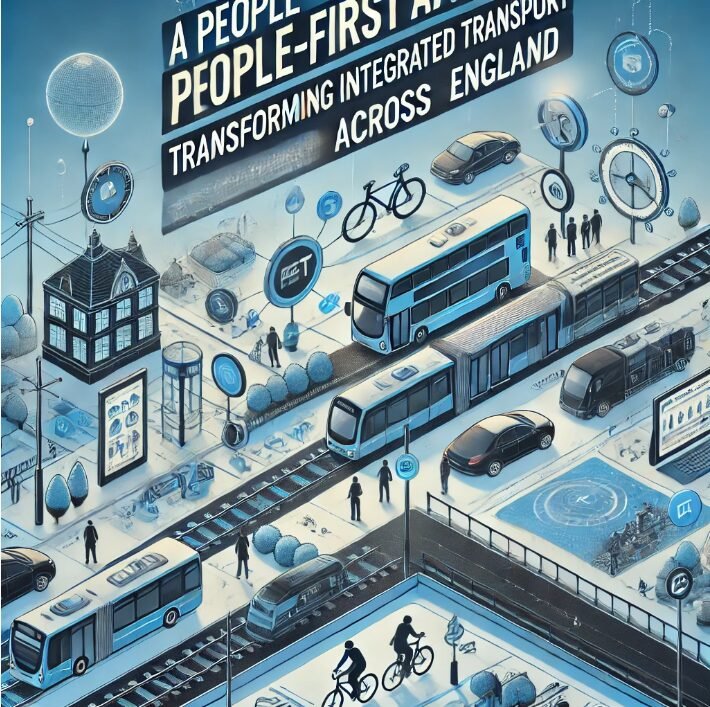
Introduction to Integrated Transport in England
The concept of integrated transport encompasses a coordinated approach to various modes of transportation, ensuring seamless connectivity and efficiency. In England, where diverse transport systems exist—including buses, trains, cycling, and pedestrian pathways—the importance of an integrated framework cannot be overstated. A well-orchestrated transport system significantly enhances mobility for all citizens, allowing for smoother transitions between different modes of travel.
Currently, England’s transport landscape presents a mixed picture. Urban areas often face congestion, making commuting challenging, while rural regions may experience limited access to public transportation. As a result, reliance on private vehicles remains high, contributing to environmental concerns and increased traffic. This highlights the necessity for a holistic approach that prioritizes the needs of the people, fostering efficient movement across urban and rural settings alike.
A people-first approach to integrated transport is fundamental in addressing these issues. By embedding user needs into the design and implementation of transport services, policymakers can create a system that not only improves accessibility but also enhances the overall commuter experience. This encompasses not just planning and investment but also engaging communities in decision-making processes to ensure that transport solutions are tailored to the lived experiences of residents.
Furthermore, integrating transport emphasizes the importance of sustainability. It encourages the use of eco-friendly modes of transport, reducing reliance on fossil fuels and lowering carbon footprints. This is essential in the context of climate change and the urgent need for systemic changes across all sectors. Ultimately, the integration of transport in England is not only about enhancing mobility but also about creating a resilient and environmentally responsible transportation network that benefits everyone.
The Vision of the Transport Secretary
The Transport Secretary’s vision for an integrated transport network is rooted in the principle of prioritizing people above all else. This approach reflects a commitment to ensuring that transport systems are not only efficient but also accessible, equitable, and responsive to the diverse needs of the community. The crux of this vision is to bridge the connectivity gaps that many areas across England currently face, facilitating a seamless movement of individuals and goods. With this vision, the Transport Secretary aims to create a transport network that works for everyone, irrespective of their geographical location or socio-economic status.
A significant aspect of the vision is the emphasis on collaboration among various transport modes, including buses, trains, and cycling routes. By integrating these modes, the aim is to foster a more cohesive travel experience that reduces dependency on private vehicles. This shift is particularly crucial in urban areas, where congestion and pollution are pressing concerns. The integration will simplify journey planning for residents and visitors alike, thereby enhancing overall satisfaction with transportation services.
Moreover, the vision includes investment in infrastructure that prioritizes safe and reliable options for all demographics, especially vulnerable groups such as the elderly and disabled. To this end, the Transport Secretary advocates for enhancing public transport facilities and services, redesigning road layouts, and improving walking and cycling pathways. Such initiatives not only promote sustainable travel habits but also seek to revitalize local economies by connecting communities more effectively. It is within this framework that the vision for an integrated transport network emerges, championing accessibility and inclusivity as the fundamental pillars of a successful transport system across England.
Key Features of the Integrated National Transport Strategy
The Integrated National Transport Strategy aims to enhance the overall transportation framework across England, emphasizing core attributes such as connectivity, accessibility, and sustainability. These key features are designed to address existing challenges in the transport sector, fostering an environment that prioritizes the needs of individuals and communities.
One of the strategy’s primary goals is to improve connectivity within urban and rural areas. By expanding and optimizing transport networks, it seeks to bridge the gaps between various modes of transportation, including buses, trains, cycling, and walking. This interconnectedness will facilitate seamless transitions for passengers, reducing travel times and increasing efficiency. Furthermore, enhancing links between major cities and local communities will ensure that all regions benefit from economic opportunities, aiding in the equitable distribution of resources and services.
Accessibility is another focal point of the Integrated National Transport Strategy. Efforts will be directed towards making public transport more user-friendly for individuals with disabilities, the elderly, and those residing in remote areas. By investing in infrastructure improvements, such as ramps, lifts, and clear signage, transportation will become increasingly inclusive. In addition, expanding service hours and routes will provide greater support to non-traditional commuters, thereby promoting a more equitable transport system.
Finally, sustainability represents a foundational element of the strategy. By integrating environmentally friendly practices into transport planning and operations, the strategy seeks to reduce carbon emissions and promote the use of green technologies. Investments in electric vehicles, cycling infrastructure, and safe pedestrian pathways will not only lower environmental impact but also contribute to healthier lifestyles for the population. These components collectively aim for a robust, people-first transportation system that serves the diverse needs of England’s residents.
People First: Enhancing User Experience
The people-first approach in integrated transport systems throughout England aims to redefine the user experience by prioritizing the needs and preferences of travelers. This strategy involves implementing various initiatives designed to make travel simpler, safer, and more enjoyable, catering to users of all ages and backgrounds.
One significant aspect of enhancing user experience is the development of user-centered design in transport services. This includes not only physical infrastructure but also digital platforms. Investing in intuitive navigation apps and user-friendly ticketing systems can streamline the travel process. Enhancements such as real-time updates on service schedules and crowding information contribute to making informed travel decisions, thereby minimizing frustration and uncertainty.
Safety is also a paramount concern. By fostering a more secure travel environment, both physical safety measures and the emotional well-being of users are addressed. Increased visibility of staff at transport hubs, improved lighting, and regular safety drills contribute to a sense of security. Additionally, initiatives to educate users about safety protocols can foster a culture of vigilance and responsibility among travelers.
Inclusivity plays an essential role in the people-first approach. Ensuring that transport services are accessible to individuals with disabilities, and accommodating families with young children, is vital for a positive user experience. This can be achieved through accessible designs in transport vehicles and facilities, as well as providing assistance services for those who require it.
Moreover, creating environments that encourage social interaction and community engagement enhances the travel experience further. This could involve local art installations in transport stations, community events, or designed waiting areas that prioritize comfort and interaction. By combining these initiatives, a cohesive and comprehensive transport framework evolves, focusing on the human element in the travel experience.
Sustainability and Environmental Impact
The integrated transport sector in England has made significant strides toward sustainability in recent years. A primary focus has been on reducing carbon emissions, as transportation is a substantial contributor to greenhouse gases. Initiatives have been implemented to encourage the adoption of low-emission vehicles and to enhance the efficiency of public transportation systems. For instance, various urban centers have increased the number of electric buses and introduced electric vehicle charging stations to promote cleaner alternatives. This transition not only supports the reduction of carbon footprints but also aligns with national goals to achieve net-zero emissions by 2050.
In addition to promoting electric vehicles, there has been a concerted effort to encourage the use of public transport. Investments in rail and bus services aim to provide reliable, efficient, and accessible options that can effectively reduce individual car usage. Enhanced frequency of services, improved pricing strategies, and better route planning have all contributed to making public transport a more attractive choice. Various campaigns aim to shift public perception, highlighting the environmental benefits and convenience of public transportation over personal vehicle travel.
Moreover, the promotion of cycling and walking serves as another sustainable strategy within the integrated transport framework. Infrastructure improvements, such as dedicated bike lanes and pedestrian-friendly zones, make it safer and more appealing for residents to use these eco-friendly modes of transport. Local governments are increasingly recognizing that the development of such infrastructure not only fosters sustainability but also enhances public health by encouraging physical activity and decreasing air pollution levels.
Through these combined efforts—investing in low-emission technologies, enhancing public transport, and promoting cycling and walking—England steps closer to a more sustainable integrated transport system that prioritizes environmental impact and aligns with contemporary climate goals.
Collaboration Across Sectors
The integration of transport systems across England hinges significantly on collaboration among various sectors, including government entities, local authorities, and private enterprises. This multifaceted cooperation is essential for crafting a comprehensive strategy that accommodates the diverse needs of the population, ensuring efficient and accessible transport solutions. By leveraging the strengths and resources of each sector, stakeholders can create a cohesive transport network that aligns with the objectives of a people-first approach.
Firstly, government agencies play a critical role in establishing the policy framework necessary for integrated transport. They provide leadership and allocate funding aimed at fostering collaboration among local authorities and private companies. The government’s commitment to facilitating partnerships can catalyze innovative solutions that improve public transport infrastructure, thereby better serving communities across England.
Local authorities, often more attuned to the specific needs of their residents, can pilot initiatives that showcase the potential of integrated transport. Their knowledge of local demographics, travel patterns, and community concerns enables them to effectively communicate what is required for transport development. When they connect with neighboring local authorities, they can exchange ideas and best practices, allowing for a more holistic approach to transport planning.
Moreover, partnerships with private enterprises are pivotal for harnessing technological advancements and funding opportunities. Companies that specialize in transport solutions, such as ride-sharing and digital ticketing, can bring innovative ideas to the forefront of integrated transport discussions. By collaborating with these organizations, local authorities can enhance service delivery and access to information for commuters.
In conclusion, the success of an integrated transport strategy in England demands a multifaceted collaboration across government, local authorities, and private enterprises. Each sector’s unique contributions can collectively lead to a more efficient, accessible, and user-friendly transport system that prioritizes the needs of the public.
Community Engagement and Feedback Mechanisms
Effective community engagement is essential for the successful planning and implementation of integrated transport solutions across England. As public reliance on transport systems continues to grow, the need to incorporate citizen feedback into the development process becomes increasingly critical. By fostering collaboration between local authorities, transport agencies, and the community, stakeholders can ensure that transport solutions are aligned with the needs and aspirations of the people they serve.
One significant approach to enhancing community involvement is through structured feedback mechanisms. These can take various forms, including surveys, public forums, workshops, and online platforms dedicated to receiving input on proposed transport projects. By allowing citizens to share their experiences, beliefs, and preferences, transport planners can identify prevalent concerns and preferences, which can significantly inform decision-making processes. Furthermore, these initiatives not only provide valuable insights but also promote transparency and accountability within transport development undertakings.
Moreover, incorporating technologies such as mobile applications and social media can streamline the feedback process. These digital tools allow for more real-time engagement, enabling community members to express their views easily and frequently. For example, an app could facilitate the reporting of transport issues, allowing citizens to report delays or suggest improvements quickly. This contemporary method of engagement helps cultivate a sense of ownership among residents towards their transport networks.
Additionally, participatory design workshops can be implemented to gather diverse perspectives. Engaging community members directly in creating transport strategies ensures that the proposed solutions resonate well with local identities and values. Therefore, the emphasis on feedback mechanisms and community engagement is not merely beneficial but essential for developing effective, inclusive transport systems. This proactive approach significantly enhances the likelihood of successful long-term outcomes while fostering a sense of solidarity within the community, ultimately transforming integrated transport across England.
Challenges Ahead for Integrated Transport
The implementation of an integrated transport strategy in England faces a myriad of challenges that must be addressed to ensure its success. One of the foremost obstacles is the fragmented nature of transport services, which often leads to inefficiencies and gaps in service provision. Various transport operators, including buses, trains, and trams, often function in silos. This lack of coordination can result in increased journey times and passenger frustration, ultimately undermining the aim of seamless travel.
Another critical challenge is funding and resource allocation. The financial sustainability of an integrated transport approach hinges on securing investment from public and private sectors alike. Insufficient funding can lead to inadequate infrastructure, delays in project implementation, and an inability to maintain existing services. Stakeholders must work collaboratively to attract financial support, possibly through innovative funding mechanisms or partnerships that offer mutual benefits.
Public acceptance and behavior also present significant hurdles. Transitioning to an integrated transport system often requires changes in how individuals perceive and utilize different modes of transport. For example, promoting public transport over private vehicles must be accompanied by initiatives to ensure that public transport is reliable, efficient, and user-friendly. Engaging with the community through awareness campaigns and feedback sessions can help to build trust and encourage usage of the integrated system.
Furthermore, technological integration poses another challenge. Establishing a robust digital infrastructure that allows for real-time data sharing, journey planning, and ticketing across different transport modes is vital. This requires ongoing investment in technology and innovation, alongside training for personnel. Overcoming these challenges will demand a concerted, collaborative effort from all stakeholders involved, paving the way for a more cohesive integrated transport system that meets the needs of all users.
Conclusion: Moving Towards a Connected Future
Throughout this blog post, we have examined the transformative potential of a people-first approach to integrated transport across England. The significance of prioritizing the needs and experiences of individuals cannot be overstated, as it serves as the foundation for developing a transportation system that is efficient, accessible, and inclusive for all citizens. By placing people at the center of transport decisions, we can ensure that variations in mobility needs are met, fostering a culture of connectivity that enhances social equity.
The integration of various transport modes—from buses and trains to cycling and walking—highlights the necessity for a cohesive framework that promotes smooth transitions and interoperability. Innovative solutions such as real-time information sharing and multi-modal ticketing systems serve to streamline travel experiences while reducing obstacles faced by commuters. As we advocate for an integrated transport solution, it is crucial that we also consider the environmental implications, recognizing that sustainable practices are essential for a connected future.
Furthermore, engaging communities in the development of transport infrastructure is vital. By soliciting input from local populations, we can address specific needs and preferences, ultimately fostering a sense of ownership and responsibility among users. This collaboration with stakeholders ensures that the system not only serves current demands but also adapts flexibly to emerging trends and technologies.
Looking ahead, it is clear that a people-first integrated transport system is not merely a lofty ambition; it is an achievable goal that necessitates commitment from government entities, businesses, and the community. As we continue to invest in the modernization of transport networks, we pave the way for a future where all individuals can navigate England with ease, efficiency, and dignity. Embracing this change offers the promise of a better-connected England, wherein transportation augments the quality of life for all its residents.
Equipping your vehicle with the right accessories transforms everyday commutes and long cross-country road trips into safer, cleaner, and far more organised journeys. From life-saving breakdown essentials to interior comfort upgrades, we have tested and ranked the top 10 must-have car accessories for British motorists.
Our editorial team independently assesses motoring accessories based on real-world utility in UK driving and parking environments. Evaluation criteria include build quality under damp British weather conditions, ease of fitment across common UK boot sizes (hatchbacks, estates, and SUVs), anti-theft reliability in public car parks, and long-term value for money. We only recommend accessories that meet strict motorist security and convenience standards.
Whether you are navigating the rain-slicked M25, negotiating pothole-strewn rural B-roads, or parking on busy high streets, owning a car in the UK presents unique daily challenges. The factory-fitted equipment in modern vehicles is impressive, but carefully chosen aftermarket accessories can significantly elevate your safety, comfort, and peace of mind on the road.
At Parking Management Network UK, our team has put dozens of motoring gadgets, maintenance tools, and cockpit upgrades through rigorous real-world testing. We have evaluated ease of installation, durability in unpredictable British weather, everyday practicality, and value for money. Here are the 10 indispensable car accessories every UK driver should keep close at hand.
Nextbase 622GW 4K Dash Cam
In an era of rising insurance premiums and contentious road incidents, a dependable dash cam is the single most vital accessory any UK driver can install. The Nextbase 622GW sits at the pinnacle of dash cam technology, delivering true 4K recording at 30fps alongside ultra-smooth digital image stabilisation that eliminates the jitter of uneven tarmac. Crucially for British winters, its Extreme Weather Mode cuts through heavy mist, downpours, and road spray to capture crisp registration plates when you need them most. Built-in what3words emergency integration can pinpoint your precise location to emergency services even without a cellular data connection, making this a genuinely life-saving cockpit addition.
- Flawless 4K resolution with image stabilisation
- Dedicated Extreme Weather mode for UK rain and fog
- Built-in what3words emergency rescue integration
- Quick and secure Click&Go PRO magnetic mount
- Premium price bracket
- Requires a high-end U3 micro-SD card sold separately
| Resolution | 4K at 30fps / 1440p at 60fps |
|---|---|
| Screen Size | 3-inch HD IPS Touchscreen |
| Connectivity | Wi-Fi, Bluetooth 5.0, GPS |
| Special Features | what3words, Alexa Built-in, Super Slow Motion |
Ring RTC1000 Rapid Digital Tyre Inflator
Incorrect tyre pressures compromise fuel economy, accelerate tread wear, and severely lengthen stopping distances on wet roads. Ring is a trusted name across the UK automotive sector, and the RTC1000 tyre inflator demonstrates why. Capable of inflating a completely flat 13-inch tyre to 35 PSI in just under two minutes, this workhorse saves you from frantic petrol station visits. It features a bright backlit digital display, an auto-stop function that cuts power precisely at your pre-set pressure, and a generous 3.3-metre power cable alongside an integrated LED light for dark, cold roadside top-ups.
- Rapid inflation time under 2 minutes
- Accurate auto-stop prevents over-inflation
- Integrated bright directional white LED light
- Generous power lead easily reaches all four wheels
- Operates via 12V socket rather than cordless battery
- Noticeably loud during full-load operation
| Power Source | 12V DC in-car auxiliary socket |
|---|---|
| Max Pressure | 100 PSI |
| Cable Length | 3.3 metres |
| Inflation Time | 2 minutes (0 to 35 PSI) |
NOCO Boost Plus GB40 1000A Jump Starter
A flat battery on a frosty January morning can wreck your schedule in seconds. The NOCO Boost Plus GB40 renders cumbersome jump leads and long roadside recovery waits obsolete. Delivering 1,000 amps of peak starting power, this compact lithium pack easily starts petrol engines up to 6.0 litres and diesels up to 3.0 litres on a single charge. Its mistake-proof UltraSafe spark-proof technology and reverse-polarity protection mean anyone can safely jump-start a vehicle without fear of electric sparks or vehicle ECU damage. When not reviving dead batteries, it doubles as a heavy-duty portable power bank.
- Compact footprint fits neatly into glovebox
- Patented spark-proof and reverse polarity safety
- Holds charge for months in colder conditions
- Doubles as a fast USB power bank and emergency torch
- Jumper cables are relatively short
- Recharges via Micro-USB rather than modern USB-C
| Peak Amps | 1,000 A |
|---|---|
| Engine Compatibility | Up to 6.0L Petrol, 3.0L Diesel |
| Battery Chemistry | Lithium-Ion |
| Weight | 1.09 kg |
Drive Auto Products Car Boot Organiser
Loose shopping bags, washer fluid bottles, and gym gear sliding across the boot carpet is a nuisance every motorist knows well. The Drive Auto Products Boot Organiser is one of the sturdiest storage solutions available. Featuring reinforced heavy-duty Oxford fabric panels that will not bow or buckle, this multi-compartment tidy secures firmly to the floor or luggage anchor points using adjustable tie-down straps. It collapses down into a slim briefcase format when not in use, making it as versatile as it is hardwearing.
- Reinforced base panels prevent sagging and collapse
- Tie-down securing straps prevent boot sliding
- Fully collapsible into half-size or flat-pack
- Tough, wipe-clean Oxford fabric construction
- Not fully waterproof against liquid chemical spills
- Velcro base can pull on delicate boot fabric linings
| Material | Reinforced Oxford Polyester |
|---|---|
| Dimensions (Expanded) | 58.4 x 43.2 x 27.9 cm |
| Compartments | Multi-compartment with sub-dividers |
| Mounting | Tie-down straps and non-slip base |
Belkin BoostCharge Magnetic Wireless Car Vent Mount PRO
Holding a phone while driving in the UK carries a mandatory £200 fine and six penalty points. A rock-solid car mount is legally non-negotiable. Belkin’s BoostCharge Magnetic Car Vent Mount PRO utilizes powerful MagSafe-compatible magnets that hold your smartphone steadfast even when bouncing over severe potholes or speed cushions. It clips securely into standard air vents and delivers fast 15W wireless charging, keeping your phone replenished while running navigation and music streaming apps simultaneously.
- Ultra-strong MagSafe magnetic grip
- Official 15W fast wireless Qi/MagSafe charging
- Effortless portrait-to-landscape rotation
- Sturdy vent clamp with secondary stabilizer arm
- Designed primarily for modern Apple iPhone handsets
- Thick non-MagSafe phone cases will weaken hold
| Power Output | Up to 15W Fast Wireless |
|---|---|
| Mounting Type | Air Vent Clip |
| Compatibility | MagSafe iPhones (12 through 16 series) |
| Rotation | 360-degree ball joint |
ThisWorx Portable Car Vacuum Cleaner (TWC-01)
From muddy country dog walks to dried-on biscuit crumbs after the school run, keeping a vehicle interior presentable requires swift action. The ThisWorx portable vacuum runs directly off your vehicle’s 12V auxiliary cigarette socket, providing continuous, fade-free suction without the battery fade of cordless domestic vacs. It includes a HEPA filter to trap fine dust and allergen particles, alongside a flexible extension hose, crevice nozzle, and stiff brush attachment tailored to pull gravel out of deep carpet footwells.
- Generous 4.8-metre lead easily reaches entire cabin
- Continuous power via 12V socket avoids dead batteries
- Compact zipped carry case keeps accessories together
- Includes spare washable HEPA filter
- Suction is moderate compared to heavy garage wet-and-dry vacs
- Plastic casing feels somewhat lightweight
| Power Input | 12V DC (106W motor) |
|---|---|
| Cord Length | 4.8 metres |
| Filtration | Washable HEPA Filter |
| Weight | 1.1 kg |
Anker 323 52.5W Fast Car Charger
Older built-in car USB ports often trickle-charge your smartphone at an agonizingly slow rate, sometimes failing to keep pace with GPS mapping apps. Anker’s 323 car charger plugs flush into your 12V/24V socket, supplying up to 30W via USB-C Power Delivery and an additional 22.5W via USB-A. Built with Anker’s MultiProtect safety system, it manages temperature and voltage to guard against overcharging, ensuring your phone or tablet charges quickly and safely during brief commutes.
- High-speed 30W USB-C PD output charges modern phones rapidly
- Dual ports allow simultaneous fast charging of two devices
- Compact aluminium alloy trim sits flush with dash
- MultiProtect safety circuitry guards against power surges
- Charging cables not included in the box
- Subtle soft-glow LED light might distract some drivers at night
| Total Output | 52.5W |
|---|---|
| Ports | 1x USB-C (30W), 1x USB-A (22.5W) |
| Input Voltage | 12V / 24V |
| Safety | Temperature control, surge protection |
Disklok RFID Key Signal Blocker Faraday Pouches
Keyless car theft and relay attacks remain a widespread concern across the UK, allowing thieves to mirror your car key’s signal from inside your home and drive off in under 60 seconds. Produced by Disklok—the gold standard in mechanical vehicle security—these twin Faraday signal blocker pouches use certified shielding mesh to completely suppress all RFID, keyless entry, and cellular signals. Kept on your key ring and hallway drop tray, it provides effortless peace of mind.
- Engineered by leading UK security brand Disklok
- Certified multilayer shielding blocks 100% of relay signals
- Compact pocket-sized profile with key ring loop
- Twin pack allows protection for primary and spare keys
- Lining can wear out after years of harsh key friction
- Velcro closure must be sealed perfectly to function
| Material | Multi-layer RFID shielding fabric & PU leather |
|---|---|
| Pack Size | 2 Pouches |
| Compatibility | Universal for all keyless vehicle fobs |
| Closure | Hook-and-loop flap seal |
Swedish Ice Scraper Original
Flimsy plastic scrapers bend, snap, and leave scratch marks across your windscreen on frozen mornings. The Swedish Ice Scraper is laser-cut from thick 6mm recycled acrylic glass, engineered specifically to slice through rock-hard sheet ice in single, clean strokes without harming laminated automotive glass. Its thick, ergonomic edge clears broad swathes of frost in seconds, helping you get on the road safely and legally without sitting idling on your driveway for fifteen minutes.
- Precision laser-cut edges demolish dense ice effortlessly
- Will not scratch or gouge laminated vehicle glass
- Constructed from indestructible 6mm acrylic sheet
- Straightforward, rugged ergonomic grip
- Lacks an integrated insulated glove
- Higher cost than cheap service station alternatives
| Material | 6mm laser-cut recycled cast acrylic |
|---|---|
| Dimensions | 100 x 120 mm |
| Origin | Manufactured in Sweden |
| Edge Type | Sharp, un-serrated optical edge |
Ergocar Memory Foam Lumbar Support Cushion
Long stints on the motorway can cause debilitating lower back stiffness and bad posture, particularly in cars with flat, unsupportive seats. The Ergocar Lumbar Support Cushion utilizes slow-rebound high-density memory foam shaped to fill the natural curve of your lumbar spine. Wrapped in a breathable 4D mesh cover that prevents sweat accumulation during summer months, this cushion straps snugly around any driver or passenger seat to deliver instant, long-distance touring comfort.
- Ergonomically contoured high-density memory foam
- Breathable 4D mesh prevents heat build-up
- Adjustable buckle straps keep cushion locked in place
- Removable cover is machine washable
- Pushes smaller drivers slightly forward in compact cabins
- Memory foam firms up slightly in sub-zero winter weather
| Core | 100% High-Density Slow Rebound Memory Foam |
|---|---|
| Cover | Breathable 4D Mesh with zipper |
| Fixing | Dual elasticated clip straps |
| Dimensions | 46 x 40 x 12 cm |
Comprehensive UK Buyer’s Guide
1. Safety and Breakdown Readiness: The Boot Essentials
Before investing in aesthetic enhancements or tech gadgets, every UK driver should prioritize safety items. The UK highway network features vast stretches of ‘smart’ motorways with intermittent hard shoulders, meaning a breakdown can place you in vulnerable conditions. Prioritise a self-contained lithium jump starter (such as the NOCO GB40) and a rapid 12V tyre inflator. Both tools allow you to rectify flat batteries or slow punctures yourself within minutes, preventing extended waits on exposed verges.
2. UK Legal Requirements and Cockpit Accessories
Using a handheld mobile phone while behind the wheel carries severe penalties under UK road law: 6 penalty points and an immediate £200 fine. Even touching your phone to skip a playlist or check a map at red lights is prohibited unless the phone is securely mounted in a designated dashboard or vent holder. When selecting mounts, ensure they do not obstruct your 45-degree field of vision through the windscreen wiper sweep, as this can result in an MOT failure and police caution.
3. Combatting UK Vehicle Crime with Signal Protection
With keyless entry now standard across most family hatchbacks, SUVs, and executive saloons, ‘relay theft’ has surged across suburban UK neighbourhoods. Criminals use electronic signal amplifiers from your front driveway to clone key codes through windows and doors. Always pair your modern car key with a certified multi-layer Faraday pouch (like Disklok’s RFID pouches). It is one of the least expensive accessories you can buy, yet provides comprehensive defence against keyless car cloning.
4. Managing Weather, Moisture, and Winter Driving
British weather is notoriously variable, swinging from damp, salt-covered motorways to overnight freezing temperatures. Essential winter accessories include a solid acrylic ice scraper that clears windscreens without scratching, and demisting pads or interior moisture absorbers. When driving in heavy winter downpours, a quality dash cam with dedicated bad-weather filtering ensures crucial evidence is preserved even through dirty windscreen wiper haze.
Frequently Asked Questions
Q: Are dash cams legally accepted as evidence in UK courts and insurance claims?
Yes. UK police constabularies and motor insurance providers routinely accept and encourage dash cam footage to resolve disputed liability claims. Many leading UK insurers even offer policy discounts of between 10% and 20% for motorists who have an approved dash cam installed.
Q: Where is the legal position on my windscreen to mount accessories?
Under the UK Highway Code and MOT guidelines, accessories (like sat-navs, phone holders, or dash cams) must not intrude more than 10mm into the primary vision zone directly in front of the driver (Zone A, a 290mm vertical band centred on the steering wheel). Elsewhere within the sweep of the windscreen wipers (Zone B), items must not protrude more than 40mm. Mounting dash cams high up behind the rear-view mirror keeps them legal and unobtrusive.
Q: How often should I use a digital tyre inflator to check pressures?
You should check your tyre pressures at least once a fortnight and before any prolonged motorway journey. Tyres naturally lose 1 to 2 PSI per month, and fluctuating cold weather drops internal air pressure further. Maintaining proper pressure improves fuel economy by up to 3% and maximizes wet braking efficiency.
Q: Will a 12V accessory drain my car battery if left plugged in?
In many modern vehicles (such as Ford, Volkswagen, and BMW models), 12V auxiliary sockets cut power automatically within 10 to 15 minutes of turning off the ignition. However, in certain cars, the cigarette lighter port remains permanently live. If your port remains live with the engine off, disconnect high-draw items like dash cams, coolers, or heated cushions to prevent draining your 12V starter battery.
Final Verdict: Which Should You Choose?
Equipping your car with dependable accessories is about practical protection, safety, and everyday comfort. If you can only choose two items today, start with the Nextbase 622GW 4K Dash Cam for unparalleled legal protection on the road, alongside the Ring RTC1000 Tyre Inflator to safeguard against flat tyres and uneven tyre wear. Combined with a Disklok Faraday Pouch to thwart keyless thieves, these accessories form an essential foundation for trouble-free motoring across the UK.
Affiliate Disclosure: Parking Management Network UK is a participant in the Amazon Services LLC Associates Program. As an Amazon Associate, we earn from qualifying purchases at no extra cost to you. Product prices, ratings, and availability are subject to change on Amazon.co.uk.
Check out more articles

Glaswegians Alerted: Important Steps to Avoid New Pavement Parking Fines

UK's Unified Transport Strategy: A Vision for Seamless Connectivity

The Consequences of Parking in a Permit Holders Only Area in the UK

Top Parking Management Companies in Estonia
Parking in the Lone Star State: How Texas’ Top Parking Management Companies Tackle Growth, Tech, and...

