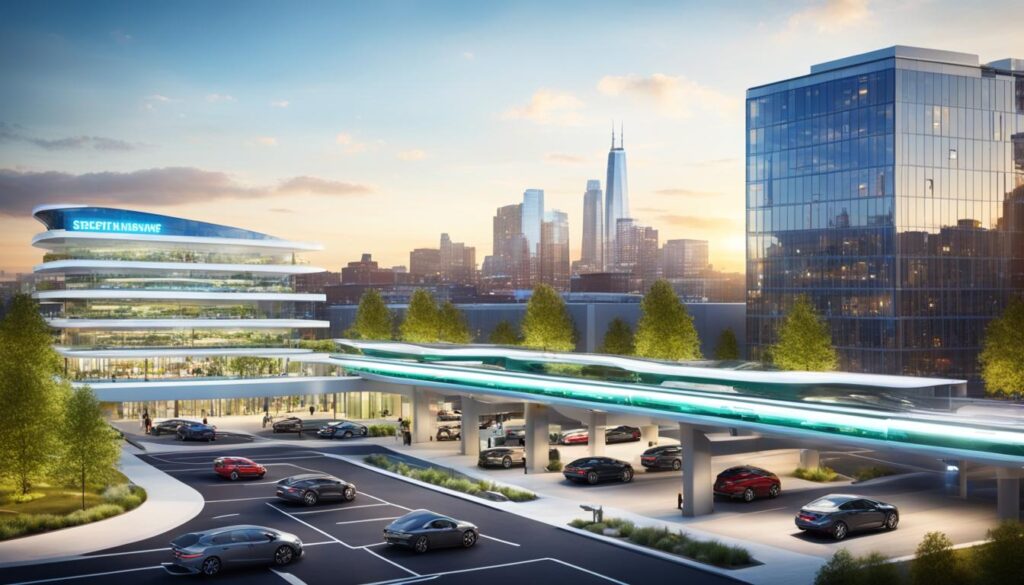
Imagine gliding smoothly through busy city streets, easily finding a parking spot. This would cut down on your carbon footprint and change how our cities look. In 2021, smart parking solutions are making this dream a reality. They use the Internet of Things (IoT), self-driving technologies, and data to transform our driving and parking habits. These fresh ideas are not just improving how we travel but also making our cities better places to live.
Key Takeaways
- Smart parking solutions are utilising IoT, autonomous technologies, and data analytics to transform the way drivers find, access, and pay for parking.
- These innovative trends are optimising urban infrastructure and promoting sustainable mobility by reducing traffic congestion and emissions.
- Sensor-based parking guidance systems and real-time parking availability data are enhancing the driver experience and enabling more efficient space utilisation.
- Autonomous valet parking and predictive analytics are further streamlining the parking process and contributing to a more seamless urban mobility ecosystem.
- The integration of electric vehicle charging stations into smart parking systems is supporting the transition to sustainable transportation.
But which smart parking trends are really changing our cities in 2021? How do they change how we get around and live in our cities? Let’s look into these exciting changes in parking and see what the future holds for smart cities.
Introduction to Smart Parking Solutions
Cities are facing big issues like too much traffic, not enough parking, and more electric cars. This is where smart parking solutions come in. They use new smart parking management technologies and data to change how we park. This helps improve the driver experience and supports sustainable mobility in our cities.
The Need for Smarter Parking Management
Because there’s more need for parking than spaces, there’s more traffic and angry drivers. Old ways of managing parking are not doing well enough. Smart parking solutions offer a better way. They show real-time openings and include spots for electric cars. This helps eco-friendly drivers find what they need.
Overview of Smart Parking Trends in 2021
In 2021, cities are working to be smarter and greener. They’re using smart parking trends to do this. Technologies like sensors, analytics, and even self-parking cars are making a big change. They’re making parking easier and helping cities use their space better.
Internet of Things (IoT) Parking Solutions
Adding Internet of Things (IoT) tech is key to improving parking. It connects sensor systems and analyses data live. These smart solutions make it easier for drivers to find parking in cities, helping with the city’s smart infrastructure and sustainable mobility.
Sensor-Based Parking Guidance Systems
Sensor-based parking guidance systems show how IoT technology changes parking. They have sensors in parking spots to know if they are free. This info helps drivers quickly find a spot, cutting down on search time and pollution. It makes driving better and supports sustainable mobility goals.
Real-Time Parking Availability Data
Thanks to IoT technology, drivers now get real-time parking data. Systems use sensors and algorithms to check and share spot availability. This info is sent to drivers through apps or signs, helping them find parking smarter. It helps make driving in the city more efficient.
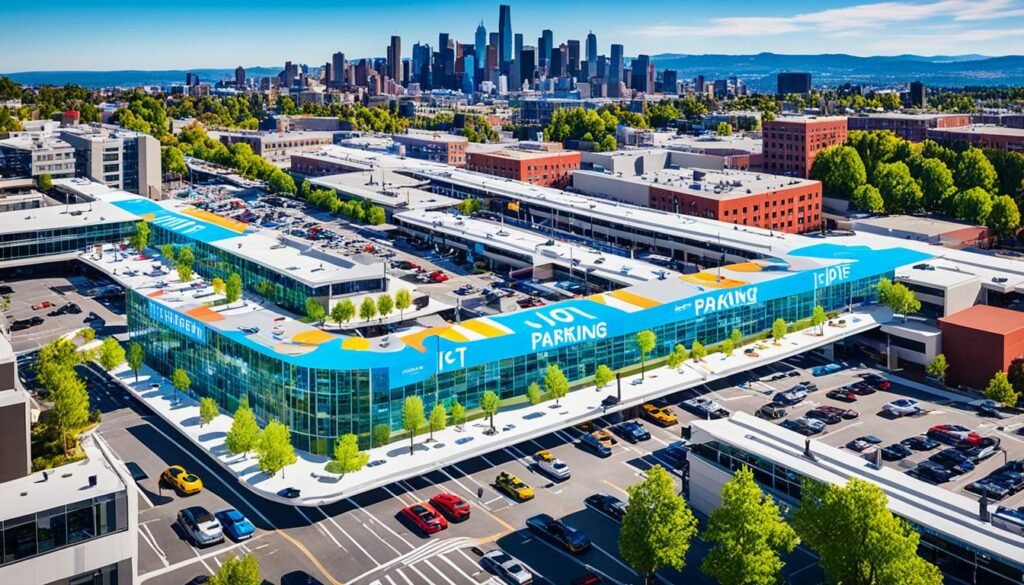
smart parking trends in 2021
Autonomous valet parking is a big trend in 2021. It lets drivers drop their cars at certain spots. Then, self-driving tech automatically parks the cars. This saves drivers the trouble of looking for parking spots. It also helps use parking areas better and cuts down on traffic.
Autonomous Valet Parking
Autonomous vehicles are changing how we park. You can leave your car at a zone for this. The car then finds a spot itself. This method makes parking easier for people. It also helps make better use of parking spaces in cities,
Predictive Parking Analytics
Another trend is predictive parking analytics. These systems use data and learning tech to predict parking needs. Cities can then set prices, decide where to put parking, and make sure drivers are happy. This approach helps the environment by reducing emissions from cars hunting for parking spots.
| Smart Parking Trend | Key Benefit | Impact on Driver Experience | Contribution to Sustainable Mobility |
|---|---|---|---|
| Autonomous Valet Parking | Efficient space utilisation, reduced congestion | Convenient, hassle-free parking experience | Optimised use of limited parking resources |
| Predictive Parking Analytics | Improved parking availability and pricing strategies | Reduced time and emissions spent searching for parking | Enhanced data-driven decision making for sustainable mobility |
Electric Vehicle Charging Stations
The rise of electric vehicles (EVs) is making smart parking systems smarter. Now, these systems have EV charging stations, making it easy for drivers to charge as they park. This change helps the world move towards more sustainable ways of transportation and fits with smart city plans.
Integrating EV Charging into Smart Parking Systems
More electric cars mean we need more places to charge. Smart parking spots are now adding charging stations to make it easy. This makes it more likely for people to choose green ways to get around cities.
Adding charging stations to smart parking plans helps everyone. It makes finding a charging spot easy, lets drivers pay with their phone, and shows which stations are free. This makes using electric cars in cities smoother and helps in building smart and green communities.
Smart parking systems also use cool tech like analytics to work better. They use the charging data to put stations where they’re needed most. This makes charging your electric car more efficient and easier.
With cities investing in new technology, making charging for electric vehicles easier is a huge step. It helps grow the use of electric cars, which is good for the environment. We’re moving towards cleaner and smarter ways to get around our cities.
Mobile Parking Apps
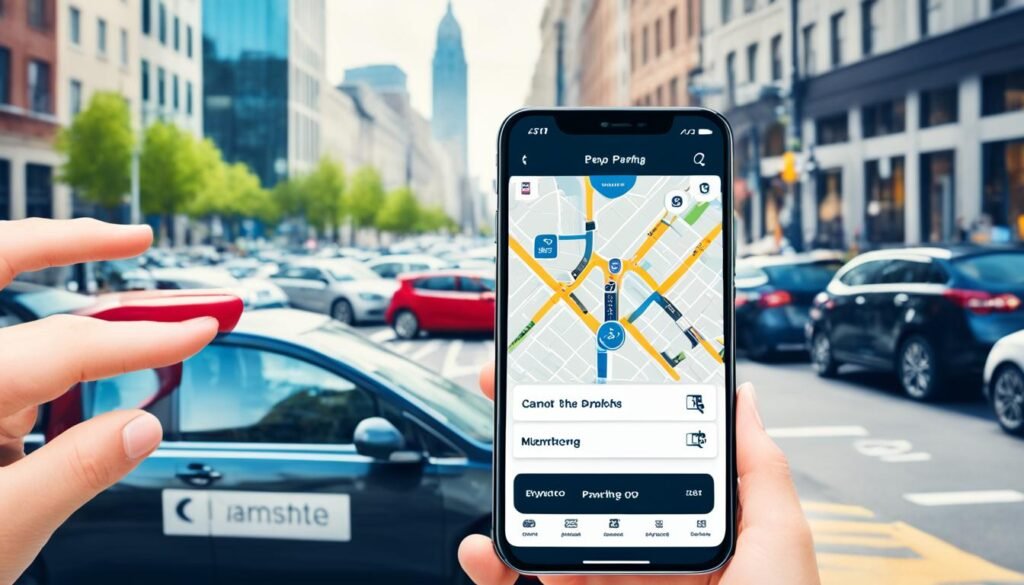
In 2021, mobile parking apps stand out for their ease and convenience. They make finding, accessing, and paying for parking simple. Now, drivers can smoothly handle parking across cities.
Convenient Parking Payments and Reservations
Modern drivers love the features in mobile parking apps. You can book and pay for a spot early. This means no more looking for spots last minute or dealing with cash. Drivers get to choose their parking ahead, making their trip stress-free.
Paying is easy too, with mobile payment options built into these apps. Drivers can pay with their phones, avoiding the need for coins or meters. This quick and modern way to pay saves time and is better for the environment.
Personalised Parking Recommendations
These apps also use data to offer personalised parking suggestions. They look at where you’ve parked before, your current location, and more. Then, they recommend the best parking for you.
They might suggest the closest spot, the cheapest place to park, or predict future spots. This tailored advice helps drivers make smart choices. It’s great for an overall better driving experience and for improving smart city living.
Parking Space Optimisation Strategies
In 2021, smart parking practices are finding better ways to use parking space. They use dynamic pricing for parking. With this method, the parking price changes in real-time. It depends on how many people want to park there, the place, and the time. This makes parking cheaper in less busy spots or at quieter times. As a result, parking spaces are used better.
Dynamic Pricing for Parking
Dynamic pricing is big news for making better parking spaces. It changes the price of parking as people park more or less. This makes drivers think about when and where to park, which is good for everyone. It makes parking smoother for drivers. Plus, it’s friendly to our cities and helps the environment too.
Shared Parking Models
Shared parking is also making a big difference. It means different groups or places can use the same parking. Businesses, homes, and public spots can share. Using data and tech, they match who needs parking with places available. This helps use spaces well and means we don’t have to build so much new parking in towns.
Smart City Infrastructure Integration
Smart parking solutions are becoming a key part of smart city planning in 2021. By linking parking to other city systems, such as smart traffic management and green transport, cities can use resources better. This approach also makes the city more driver-friendly.
Intelligent Traffic Management
Smart parking now merges with clever traffic control systems. They share real-time data and make joint decisions. This allows cities to smooth traffic, cut jams, and give drivers real-time parking and route tips.
Using IoT, these systems can even guess future traffic, adjust parking costs, and show people where to park. This makes getting around easier.
Sustainable Urban Mobility
Adding smart parking to a city’s plan also helps with green transport goals. It gives people easy parking and connects EV charging points. This push drives more use of eco-friendly travel.
Plus, the info from smart parking helps city planners choose where to put money for transport and eco projects. It’s a win-win for the environment and drivers.
Challenges and Concerns
In 2021, smart parking offers many benefits. But, it faces some worries and problems. Data privacy and data security are major concerns. Smart parking needs lots of data, including personal and vehicle details. It’s important to keep this data safe and be clear about how it’s used. This builds trust with the public.
Privacy and Data Security Issues
Smart parking systems collect and process private data, like who is driving and their parking behaviours. This raises issues about data privacy and data security. Strong protection for data and clear rules on its use are crucial. They help reduce worries about data misuse or leaks. If these challenges aren’t correctly addressed, people may not trust or use these new solutions.
Cost and Implementation Challenges
Bringing in smart city infrastructure and smart parking systems can be costly and hard to manage. The costs involved in buying, setting up, and keeping up the equipment and software can be a lot. This is even harder for local governments with tight budgets. Adding smart parking to existing city systems also takes a lot of planning and money. All this makes the process complicated and expensive.
Conclusion
The smart parking trends of 2021 are changing cities through IoT technology. They use autonomous systems and data insights. Drivers benefit from sensor systems, real-time data, self-parking, and advanced predictions. This tech makes parking easier, smarter, and more efficient.
Integrating smart parking into smart cities is key for green, urban transport. It connects parking with traffic control and public transit. This helps cities use resources better and encourages green transport. Yet, challenges like data protection and costs must be solved for tech to work well.
The trends in smart parking in 2021 are reshaping city travel for the better. They make parking hassle-free and help build eco-friendly, tech-powered cities. As cities tackle traffic and parking problems, these new solutions are vital for future urban living.
FAQ
What are the key smart parking trends in 2021?
In 2021, we’re seeing smart parking grow with IoT, self-driving tech, and useful data. These new trends aim to change how we park. They offer better guidance, instant parking info, cars that can park themselves, an increase in electric vehicle support, and apps that make parking easier.
How are IoT technologies being used in smart parking solutions?
IoT plays a big role in smart parking. It joins sensors with data analysis to show free spaces fast. These systems lessen the time and pollution caused by looking for parking spots.
What is autonomous valet parking, and how does it benefit smart parking?
Autonomous valet parking is a top trend in smart parking this year. With this tech, cars can park themselves after being dropped off. It makes parking easy for drivers without adding to traffic or parking space problems.
How are smart parking solutions integrating with electric vehicle (EV) charging infrastructure?
The push for electric cars is bringing charging points to smart parking areas. Now, smart parkings offer EV stations for easy charging while parked. This supports green transport and smart city aims.
What role do mobile parking apps play in smart parking trends?
Mobile apps are making a big difference in smart parking this year. They help drivers find and pay for parking easily. Apps show free spots live, let you book a spot, and provide personal tips on where to park, making it all smoother.
How are smart parking solutions optimising parking space utilisation?
To make better use of parking, smart tech is introducing flexible prices. This way, parking costs can change based on when and where you park. It encourages smart parking choices, using up less busy areas more.
How are smart parking solutions being integrated into smart city infrastructure?
Smart parking is weaving into smart city plans this year. It connects with traffic and transport systems, making cities work better together. This match helps with green movement and saving space smartly.
What are the challenges and concerns associated with smart parking trends?
Smart parking faces challenges like keeping data safe and respecting privacy. Protecting and being open about the data is vital for trust. Plus, there are worries about the costs and the hard work needed to get smart parking widely used.