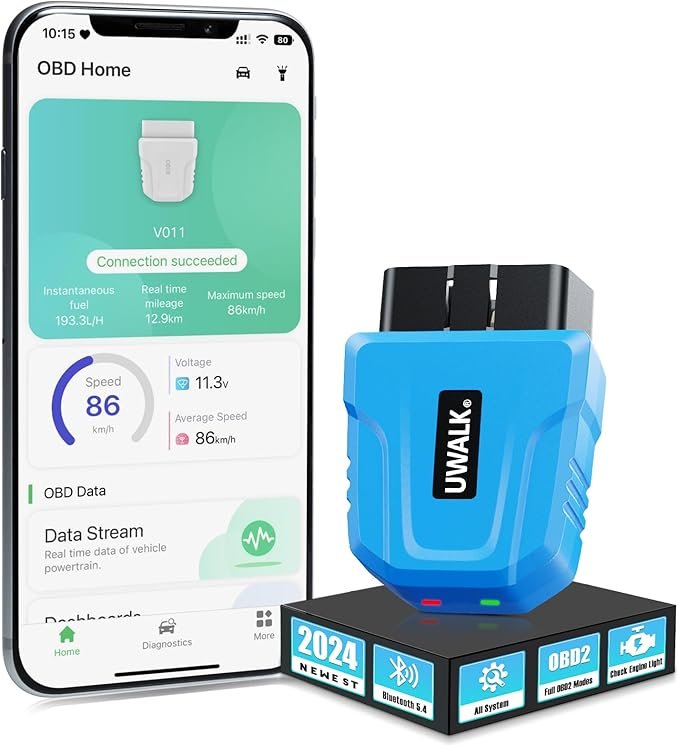
Introduction to Car Bluetooth Diagnostic Scanners
A car Bluetooth diagnostic scanner is a sophisticated tool that connects wirelessly to a vehicle’s onboard computer system, enabling users to access vital information regarding the vehicle’s health and performance. These devices utilize Bluetooth technology to establish a seamless connection with the car’s Engine Control Unit (ECU), allowing for efficient data transfer and communication. By interfacing with the ECU, a car Bluetooth diagnostic scanner can read diagnostic trouble codes (DTCs), which are codes generated when the computer detects an issue within the vehicle’s systems.
Moreover, these scanners facilitate the monitoring of real-time performance data, including parameters such as engine temperature, vehicle speed, and fuel efficiency. Through an intuitive application on a smart device, users can interpret the information gathered by the scanner to diagnose problems, track vehicle performance, and make informed decisions regarding necessary repairs and maintenance. This capability is particularly valuable for car owners who wish to understand their vehicle’s condition more thoroughly, without relying solely on professional mechanics.
The functionality of these diagnostic tools extends beyond mere code reading. Many modern car Bluetooth diagnostic scanners come equipped with additional features, such as the ability to perform various car health checks, reset check engine lights, and even conduct emission tests. Consequently, these devices empower users to take proactive measures in maintaining their vehicles, ensuring optimal performance while potentially saving on repair costs and facilitating timely interventions. As the automotive landscape continues shifting towards increased reliance on digital technology, car Bluetooth diagnostic scanners represent an essential resource for effective vehicle maintenance and overall car health management.
Benefits of Using a Car Bluetooth Diagnostic Scanner
Utilizing a car Bluetooth diagnostic scanner offers multiple advantages for both everyday drivers and automotive enthusiasts. One of the primary benefits is convenience. Traditional diagnostic tools often require physical access to a vehicle’s onboard diagnostic port (OBD-II), which can sometimes be difficult to access or cumbersome to use. In contrast, a Bluetooth diagnostic scanner allows users to connect their smartphones or tablets wirelessly, making it simple to access diagnostic information from the comfort of their vehicle or even from home. This ease of access not only saves time but also enhances the user experience.
In addition to convenience, employing a Bluetooth diagnostic scanner can lead to significant cost savings. By providing users with detailed reports on a vehicle’s health and performance, these scanners enable car owners to identify potential issues early. This proactive approach to vehicle maintenance can prevent minor problems from escalating into major repairs, which are often far more expensive. By addressing issues as they arise, drivers can extend the lifespan of their vehicles and cultivate a deeper understanding of their maintenance needs.
Another vital advantage is real-time data access. A Bluetooth diagnostic scanner offers instant feedback on various parameters such as engine performance, fuel efficiency, and emissions. This immediacy allows drivers to monitor their vehicles continuously for any anomalies or warning signs. For instance, if a diagnostic trouble code (DTC) appears, users can investigate the issue promptly, potentially averting breakdowns or safety hazards. Moreover, this wealth of information can empower users to make informed decisions regarding repairs and servicing, optimizing vehicle performance and reliability.
By incorporating a car Bluetooth diagnostic scanner into regular maintenance routines, vehicle owners can enjoy a blend of convenience, cost-effectiveness, and timely insights into their vehicle’s performance, ultimately enhancing their overall driving experience.
How Bluetooth Diagnostic Scanners Work
Bluetooth diagnostic scanners are essential tools for modern vehicle maintenance, designed to connect seamlessly with a car’s onboard diagnostic system. They primarily interface with the vehicle through the OBD-II (On-Board Diagnostics) port, which is required in most vehicles manufactured after 1996. This port allows the scanner to access various systems within the vehicle, collecting information crucial for diagnosing potential issues.
The operation of Bluetooth diagnostic scanners hinges on the principles of Bluetooth technology, which enables short-range wireless communication between devices. When a Bluetooth scanner is connected to the OBD-II port, it initiates a pairing process with a compatible device, such as a smartphone or tablet. Once paired, the scanner can communicate bidirectionally with the vehicle’s onboard computer.
Data transmission occurs as the scanner requests and receives diagnostic trouble codes (DTCs) that indicate the health of different automotive systems. These codes are generated by the vehicle when it identifies a malfunction, providing mechanics and car owners with a starting point for troubleshooting. The transmission of data is typically quick and efficient, allowing for real-time diagnostics. It’s important to note that the Bluetooth scanner can also read live data streams from various sensors, providing insight into the vehicle’s operational parameters, which aids in preventive maintenance.
Interpreting the DTCs retrieved by the scanner is crucial for effective vehicle diagnosis. Each code corresponds to a specific issue or malfunction in the vehicle systems, often accompanied by a brief description. By analyzing these diagnostic codes, users can take informed steps towards resolving issues, ensuring their vehicles operate efficiently. Thus, Bluetooth technology not only enhances the ease and accessibility of automotive diagnostics but also plays an integral role in streamlining vehicle maintenance processes.
Key Features to Look for in a Car Bluetooth Diagnostic Scanner
When selecting a car Bluetooth diagnostic scanner, several essential features should guide your decision-making process. Compatibility is paramount; ensure that the scanner supports a range of vehicle makes and models. Most modern Bluetooth scanners cater to a variety of brands, including both domestic and foreign vehicles. This versatility ensures that you can diagnose issues across multiple cars, making it a valuable tool for any car owner or professional mechanic.
The functionality of the scanner is another critical factor. A comprehensive scanner should offer various features, such as live data monitoring, which allows you to check the real-time performance of essential systems like the engine, brakes, and transmission. Additionally, code clearing functions are indispensable; after a diagnostic check, being able to erase error codes can reset your vehicle’s system and help determine if the issues have been resolved.
Ease of use is also necessary for a diagnostic scanner. A user-friendly interface can significantly enhance your experience, especially for individuals without extensive technical knowledge. Look for scanners that are easy to set up and operate, featuring clear instructions and simple navigation. Furthermore, the availability of software updates is vital. Manufacturers should offer regular updates to ensure that the scanner remains compatible with new vehicle models and is equipped with the latest diagnostic tools.
Additional functionalities such as graphing capabilities and vehicle history tracking are often overlooked but can greatly enhance the utility of a diagnostic scanner. Graphing allows users to visualize data over time, which can assist in identifying trends or patterns in how a vehicle behaves. Meanwhile, keeping a history of previous diagnostics can be beneficial when assessing recurring issues. By considering these features, you can select a Bluetooth diagnostic scanner that best meets your needs.
Top 10 Car Bluetooth Diagnostic Scanners Best Sellers
Common Diagnostic Trouble Codes (DTCs) Explained
Diagnostic Trouble Codes (DTCs) serve as essential indicators of a vehicle’s health, generated by onboard diagnostic systems when they detect an anomaly in performance. These alphanumeric codes provide insights into various components within the vehicle, ranging from engine performance to transmission issues. Understanding these codes is crucial for vehicle owners, as they can guide necessary repairs and maintenance.
Among the most frequently encountered DTCs are codes such as P0300, which signifies a random misfire detected in the engine. This code could indicate a minor issue like a faulty spark plug, or it may hint at more significant problems such as fuel delivery issues. Another common code is P0420, showing a potential problem with the catalytic converter’s efficiency. While a P0420 could suggest the need for a costly replacement, it is vital to conduct further diagnostics to ascertain whether the problem lies elsewhere, such as in the exhaust system or the O2 sensors.
Furthermore, P0133 is another typical DTC, indicating that the engine control unit (ECU) detects a problem with the oxygen sensor’s response time. While this may not pose immediate danger to vehicle operation, ignoring it can lead to decreased fuel efficiency and increased emissions over time. It is essential to note that not every DTC indicates a severe issue; some may simply suggest routine maintenance is due.
Interpreting these codes correctly is paramount. Vehicle owners should consider consulting with a professional mechanic to ensure that the issues represented by DTCs are assessed accurately, thereby allowing informed decisions regarding repairs or replacements. Understanding the implications of these codes is a critical step in maintaining optimal vehicle performance, enhancing safety, and potentially avoiding costly breakdowns in the future.
Integrating Bluetooth Scanners with Mobile Apps
Bluetooth diagnostic scanners represent a significant advancement in vehicle maintenance and troubleshooting. When paired with mobile applications, they provide users with an intuitive interface and a plethora of features that elevate the vehicle diagnostic process. The integration allows users to connect their smartphones seamlessly to their cars, offering convenience and accessibility that is becoming increasingly essential in today’s fast-paced world.
One of the primary benefits of using mobile apps in conjunction with Bluetooth scanners is the user-friendly interface they offer. This design simplifies the diagnostic process, allowing even those without extensive automotive knowledge to navigate problems easily. Users can quickly access essential vehicle information, such as error codes and real-time data, thus facilitating faster troubleshooting and reducing the likelihood of misdiagnosis. As a result, smartphone integration makes car maintenance more approachable for a wider audience.
Moreover, mobile applications that work alongside Bluetooth scanners often provide advanced analytics that enhance user experience. These applications can analyze the data collected from the vehicle’s onboard diagnostics system, presenting it in a format that users can easily interpret. Users can receive alerts about potential issues, track performance metrics over time, and even set reminders for maintenance tasks. This level of detail enables car owners to take proactive measures in maintaining their vehicles, ultimately resulting in better performance and longevity.
Additionally, compatibility with other car maintenance services is another critical aspect of mobile integration. Many Bluetooth scanners and their associated apps now offer features that link users with nearby repair shops or service providers. This not only streamlines the vehicle maintenance process but also ensures that users can access qualified help whenever necessary, enhancing their overall vehicle ownership experience.
How to Use a Car Bluetooth Diagnostic Scanner: A Step-by-Step Guide
The process of utilizing a car Bluetooth diagnostic scanner can seem daunting, especially for those not well-versed in automotive technology. However, by following a straightforward guide, anyone can successfully diagnose their vehicle’s issues using this tool. The first step is to locate the OBD-II port in your vehicle, which is generally found beneath the dashboard or near the driver’s seat. Once located, plug the Bluetooth scanner into the port securely.
Next, before using the scanner, ensure that your mobile device has the appropriate diagnostic application installed. Many scanners operate with specific apps, available on both Android and iOS platforms. After installing the app, turn on your vehicle’s ignition without starting the engine to power up the OBD-II system. This action activates the scanner, allowing it to communicate with the vehicle’s onboard computer.
Once the scanner is connected, proceed to pair it with your mobile device via Bluetooth. Enable Bluetooth on your phone, then search for nearby devices; the scanner should appear in the list. Select the scanner to pair, and if prompted, enter the PIN provided in the scanner’s manual. Following a successful pairing, open the diagnostic app to initiate a connection between the app and the scanner.
With everything connected, you can now retrieve diagnostic codes. Within the app, find the option to “Read Codes” or “Scan for Errors.” The scanner will interface with the vehicle’s computer, pulling any error codes currently registered. Wait for the app to process and display the results. Finally, it is essential to accurately interpret the error codes, as they indicate specific issues with your vehicle. Use the app or a reliable online database to understand each code’s meaning. By completing these steps, you can effectively utilize a car Bluetooth diagnostic scanner for vehicle maintenance and troubleshooting.
Maintenance and Care for Your Bluetooth Diagnostic Scanner
Maintaining your Bluetooth diagnostic scanner is vital for ensuring its longevity and optimal performance. This essential tool, which plays a crucial role in vehicle maintenance, requires careful handling and appropriate storage practices to continue delivering accurate readings. Treating your diagnostic scanner as a valuable asset begins with understanding the environment in which it operates.
First and foremost, store your scanner in a protective case when it is not in use. This minimizes exposure to dust, moisture, and extreme temperatures, which can wreak havoc on electronic devices. A dedicated storage location that is safe from physical damage is crucial. Additionally, avoid leaving the scanner in your vehicle for extended periods, especially under direct sunlight or extreme weather conditions, as this can affect its internal components.
Regular software updates are equally important. Manufacturers often release updates to improve functionality and fix bugs, ensuring the tool works effectively. Periodically checking for these updates and installing them will help maintain the scanner’s reliability. Furthermore, familiarity with the user manual can enhance understanding of its features and lead to better usage practices.
When handling the scanner, treat it gently. Avoid dropping or applying excessive pressure, as physical damage can lead to malfunctions. It is advisable to keep it clean by periodically wiping the surface with a soft cloth. Ensure that the connectors are free from debris and moisture before using them, as this can impact connectivity and performance.
In conclusion, following best practices for the care and maintenance of your Bluetooth diagnostic scanner not only extends its lifespan but also enhances its functionality, thereby greatly benefiting your vehicle maintenance efforts. By treating this tool with respect and diligence, you can ensure that it remains an integral part of your automotive care routine for years to come.
Conclusion: Is a Car Bluetooth Diagnostic Scanner Worth It?
In reviewing the advantages and utility of a car Bluetooth diagnostic scanner, it becomes clear that this tool serves as an invaluable asset for modern vehicle maintenance. Equipped with features that allow for real-time diagnostics, these scanners provide users with critical insights into their vehicle’s performance and potential issues. The ability to connect wirelessly to a smartphone or tablet not only enhances convenience but also makes it easier for vehicle owners to keep track of their car’s health without visiting a mechanic for every little warning light.
Investing in a car Bluetooth diagnostic scanner enables proactive maintenance, which can lead to significant financial savings by allowing drivers to identify problems early, ultimately preventing costly repairs. The ease of access to diagnostic data helps demystify the complexities of modern vehicles, empowering owners with the knowledge needed to make informed decisions about their maintenance routines. Additionally, the portability and user-friendly interfaces of these devices truly cater to the needs of all car owners, whether they are seasoned mechanics or novices.
While the initial investment may vary depending on the features and capabilities of the scanner, the long-term benefits far outweigh the costs. Not only does a car Bluetooth diagnostic scanner enhance the owner’s understanding of their vehicle, but it can also facilitate smoother communication with repair professionals when needed. By integrating this tool into your car care regimen, you position yourself for greater reliability and safety on the road.
Ultimately, the value of a car Bluetooth diagnostic scanner lies in its role as a proactive approach to vehicle maintenance. As one considers their own maintenance needs and habits, this tool clearly reveals its worth as a necessary investment for the conscientious vehicle owner.